

In the world of fasteners and mechanical components, washers play a crucial role in ensuring the proper functioning and longevity of various assemblies. Among the many types of washers available, conical washers and flat washers are two commonly used options, each with its own unique characteristics and applications. As a leading washer supplier, we understand the importance of providing our customers with high-quality products and accurate information. In this blog post, we will explore the differences between conical washers and flat washers, their respective advantages, and how to choose the right washer for your specific needs.
What is a Conical Washer?
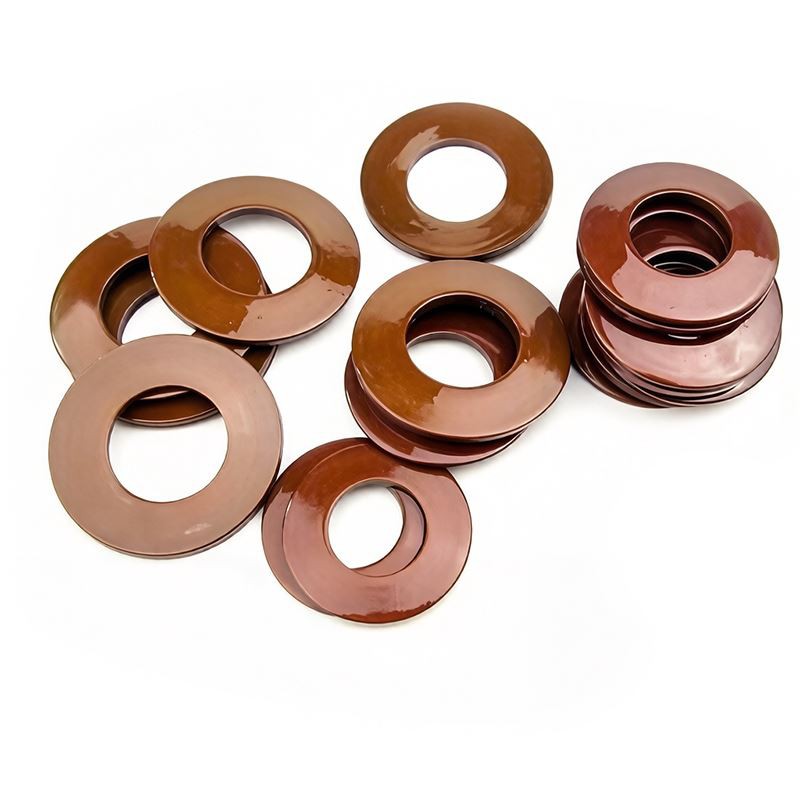
A conical washer, also known as a Belleville washer or a disc spring, is a type of washer that has a conical shape. It is typically made of spring steel and is designed to provide a high amount of spring force in a small space. Conical washers are commonly used in applications where a high level of preload or tension is required, such as in bolted joints, valve stems, and electrical connections.
One of the key advantages of conical washers is their ability to provide a constant spring force over a wide range of deflections. This makes them ideal for applications where the load or stress on the joint may vary over time. Conical washers can also be stacked together to increase the spring force and provide a more uniform distribution of load.
Another advantage of conical washers is their ability to compensate for thermal expansion and contraction. As the temperature of the joint changes, the conical washer can expand or contract to maintain the proper preload on the joint. This helps to prevent loosening and ensures the integrity of the joint.

What is a Flat Washer?
A flat washer is a simple, flat, circular disc with a hole in the center. It is typically made of metal, such as steel, stainless steel, or brass, and is used to distribute the load of a fastener over a larger area. Flat washers are commonly used in applications where a smooth, even surface is required, such as in bolted joints, nuts, and screws.
One of the main advantages of flat washers is their simplicity and versatility. They are easy to install and can be used in a wide range of applications. Flat washers can also be used to prevent damage to the surface of the material being fastened, as they provide a smooth, even surface for the fastener to rest on.
Another advantage of flat washers is their ability to reduce friction between the fastener and the material being fastened. This helps to prevent loosening and ensures the integrity of the joint. Flat washers can also be used to adjust the spacing between the fastener and the material being fastened, which can be useful in applications where precise alignment is required.
Differences between Conical Washers and Flat Washers
While both conical washers and flat washers are used to distribute the load of a fastener, there are several key differences between the two types of washers.
Shape and Design
The most obvious difference between conical washers and flat washers is their shape. Conical washers have a conical shape, while flat washers are flat and circular. The conical shape of the conical washer allows it to provide a high amount of spring force in a small space, while the flat shape of the flat washer provides a smooth, even surface for the fastener to rest on.
Spring Force
Conical washers are designed to provide a high amount of spring force, while flat washers do not provide any spring force. The spring force of a conical washer is determined by its shape, material, and thickness. The spring force of a conical washer can be adjusted by changing the number of washers stacked together or by changing the thickness of the washers.
Load Distribution
Conical washers are designed to distribute the load of a fastener over a small area, while flat washers are designed to distribute the load of a fastener over a larger area. The conical shape of the conical washer allows it to concentrate the load at the center of the washer, while the flat shape of the flat washer allows it to distribute the load evenly over the surface of the washer.
Applications
Conical washers are commonly used in applications where a high level of preload or tension is required, such as in bolted joints, valve stems, and electrical connections. Flat washers are commonly used in applications where a smooth, even surface is required, such as in bolted joints, nuts, and screws.
How to Choose the Right Washer for Your Needs
When choosing between a conical washer and a flat washer, it is important to consider the specific requirements of your application. Here are some factors to consider:
Load and Stress
If your application requires a high level of preload or tension, a conical washer may be the best choice. Conical washers are designed to provide a high amount of spring force, which can help to prevent loosening and ensure the integrity of the joint. If your application does not require a high level of preload or tension, a flat washer may be sufficient.
Surface Finish
If your application requires a smooth, even surface, a flat washer may be the best choice. Flat washers provide a smooth, even surface for the fastener to rest on, which can help to prevent damage to the surface of the material being fastened. If your application does not require a smooth, even surface, a conical washer may be sufficient.
Temperature and Environment
If your application is exposed to high temperatures or harsh environments, a conical washer may be the best choice. Conical washers are designed to compensate for thermal expansion and contraction, which can help to prevent loosening and ensure the integrity of the joint. If your application is not exposed to high temperatures or harsh environments, a flat washer may be sufficient.
Conclusion
In conclusion, conical washers and flat washers are two commonly used types of washers, each with its own unique characteristics and applications. Conical washers are designed to provide a high amount of spring force in a small space, while flat washers are designed to provide a smooth, even surface for the fastener to rest on. When choosing between a conical washer and a flat washer, it is important to consider the specific requirements of your application, such as load and stress, surface finish, and temperature and environment.
As a leading washer supplier, we offer a wide range of conical washers and flat washers to meet the needs of our customers. Our products are made of high-quality materials and are designed to provide reliable performance and long-lasting durability. If you have any questions or need assistance in choosing the right washer for your application, please do not hesitate to contact us. We are here to help you find the best solution for your needs.
If you are interested in our High Tensile Spring Washer, Shaft Retaining Rings, or National Disc Spring, feel free to reach out to us for procurement discussions. We are eager to work with you and provide the best washer solutions for your projects.
References
- Machinery's Handbook, 31st Edition
- Fastener Technology Handbook
- ASME Standards for Washers
