

In the modern manufacturing landscape, the production of turned precision parts stands at the intersection of innovation and precision engineering. As a leading supplier of Turned Precision Parts, I am always on the lookout for the latest technologies that can enhance the quality, efficiency, and capabilities of our manufacturing processes. In this blog post, I will explore some of the cutting - edge technologies that are revolutionizing the manufacturing of turned precision parts.
1. Computer - Numerical - Control (CNC) Technology Advancements
CNC technology has been the backbone of precision turning for decades, but recent advancements have taken it to new heights. Nowadays, modern CNC turning machines are equipped with high - speed spindles that can reach rotational speeds of up to 10,000 RPM or more. This increased speed allows for faster material removal rates, reducing production times significantly.
Moreover, the control systems of CNC machines have become more intelligent. Advanced software algorithms can compensate for thermal expansion during the machining process. As metal heats up during cutting, it can expand and cause dimensional inaccuracies. The new control systems continuously monitor the temperature of the workpiece and the cutting tools and make real - time adjustments to the cutting parameters. This ensures that the final turned precision parts meet the tightest tolerance requirements.
In addition, the latest CNC machines support multi - axis turning operations. Traditional lathes were typically limited to two or three axes, but modern machines can operate on five or more axes simultaneously. This allows for the production of complex geometries that were previously difficult or impossible to achieve with conventional methods. For example, intricate internal and external contours, helical features, and compound angles can be machined with high precision.
2. Automation and Robotics
Automation has become a game - changer in the manufacturing of turned precision parts. Automated loading and unloading systems have been integrated with CNC turning machines. These systems use robotic arms or conveyors to transfer workpieces between the storage area and the machining center. This not only reduces the labor required but also improves the consistency of the manufacturing process.
Robotic cells are also being employed for tasks such as deburring, measuring, and inspection. A robotic arm equipped with a deburring tool can remove sharp edges and burrs from the turned parts immediately after the machining process. This ensures that the parts are ready for use without the need for additional manual finishing steps.
In terms of inspection, robots can be programmed to pick up the finished parts and place them on a coordinate measuring machine (CMM). The CMM then precisely measures the dimensions of the part, and the data is analyzed in real - time. If a part is found to be out of tolerance, the robotic system can either send it back for re - machining or remove it from the production line as a defective item.
3. Advanced Cutting Tools
The development of advanced cutting tools has had a significant impact on the manufacturing of turned precision parts. Carbide - based cutting tools are widely used due to their high hardness and wear resistance. Recent improvements in carbide tool coatings have further enhanced their performance. For example, diamond - like carbon (DLC) coatings reduce friction between the cutting tool and the workpiece, which in turn reduces heat generation during cutting. This prolongs the tool life and improves the surface finish of the turned parts.
Cubic boron nitride (CBN) cutting tools are another innovation. CBN has excellent thermal stability and can withstand high cutting speeds and temperatures. It is particularly suitable for machining hardened metals, allowing for the production of turned precision parts with high strength and toughness.
Tool geometries have also been optimized. Advanced chip - breaking geometries on the cutting tools help to control the shape and size of the chips produced during machining. This prevents the chips from becoming entangled in the cutting area, which can cause damage to the workpiece and the tool.
4. Additive Manufacturing and Hybrid Processes
Additive manufacturing, also known as 3D printing, is starting to make its mark in the production of turned precision parts. While traditional subtractive machining processes like turning remove material to create the final part, additive manufacturing builds the part layer by layer from a digital model.
One of the advantages of additive manufacturing in the context of turned precision parts is the ability to create complex internal structures. For example, parts with internal channels or lattices can be produced, which are difficult to achieve with conventional turning methods. These internal structures can reduce the weight of the part while maintaining its strength.
Hybrid processes that combine additive and subtractive manufacturing are also emerging. For instance, an initial rough shape of a part can be created using 3D printing, and then the part can be finished using CNC turning. This approach combines the design freedom of additive manufacturing with the high precision of turning, resulting in turned precision parts with unique properties.
5. Digital Twin Technology
Digital twin technology involves creating a virtual representation of a physical manufacturing process or product. In the context of turned precision parts, a digital twin can be used to simulate the entire manufacturing process, from the design of the part to the final machining operations.
By using a digital twin, manufacturers can predict how a part will perform during machining. They can analyze factors such as cutting forces, tool wear, and thermal deformation. This allows for the optimization of cutting parameters before the actual machining process begins. For example, the cutting speed, feed rate, and depth of cut can be adjusted in the digital twin to reduce the likelihood of tool breakage and improve the quality of the turned part.
Digital twin technology also enables real - time monitoring of the manufacturing process. Sensors installed on the CNC machines can collect data on parameters such as temperature, vibration, and tool wear. This data is then fed into the digital twin, which can provide insights into the health of the manufacturing process and predict when maintenance or tool replacement is required.
6. Internet of Things (IoT) in Manufacturing
The Internet of Things (IoT) has transformed the manufacturing of turned precision parts by enabling seamless connectivity between machines, sensors, and other devices in the production environment. IoT - enabled sensors can be installed on CNC turning machines to monitor various parameters such as spindle speed, feed rate, and cutting force.
This data is transmitted wirelessly to a central monitoring system, where it can be analyzed in real - time. Manufacturers can use the data to identify trends, detect anomalies, and optimize the performance of the machines. For example, if the sensor data indicates that a particular cutting tool is experiencing excessive wear, the system can automatically schedule a tool change, minimizing downtime and improving the quality of the turned parts.
IoT also allows for remote monitoring and control of the manufacturing process. Operators can access the data from the CNC machines and make adjustments to the cutting parameters from anywhere in the world using a smartphone or a computer. This level of connectivity and control improves the efficiency and responsiveness of the manufacturing process.
7. Applications of New Technologies in Our Products
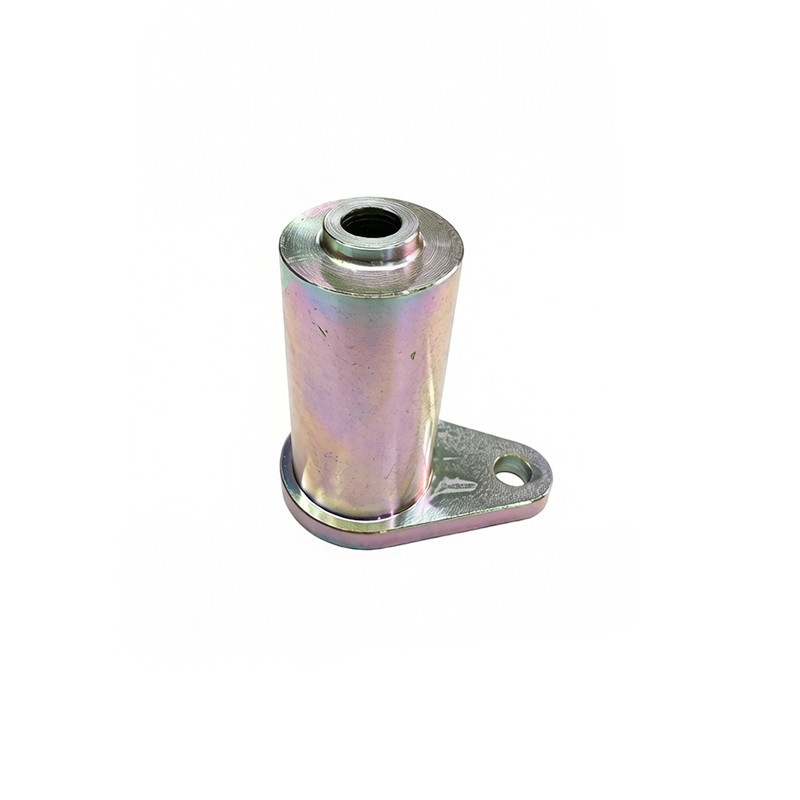
These latest technologies have a direct impact on the quality and variety of the turned precision parts we supply. For example, with the use of advanced CNC technology and multi - axis turning, we can produce high - precision Drilled Shaft components. The tight tolerances and complex geometries required for drilled shafts can be achieved with ease, ensuring that they meet the strict performance requirements of various industries such as construction and automotive.
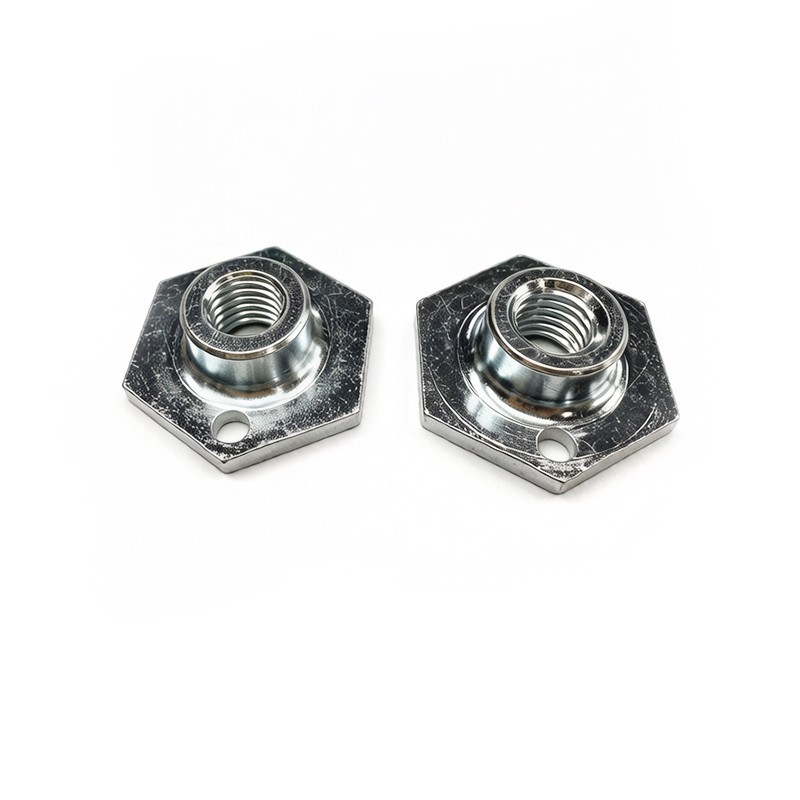
Our Hot Melt Embossed Nut production also benefits from these technologies. The advanced cutting tools and high - speed CNC turning machines allow us to produce nuts with precise dimensions and smooth surface finishes. The use of automation and robotics in the manufacturing process ensures consistent quality and high production volumes.
Conclusion
The landscape of manufacturing turned precision parts is constantly evolving, driven by the latest technologies. CNC advancements, automation, advanced cutting tools, additive manufacturing, digital twin technology, and IoT have all contributed to improving the quality, efficiency, and capabilities of the manufacturing process.
As a supplier of turned precision parts, we are committed to staying at the forefront of these technological advancements. By leveraging these cutting - edge technologies, we can provide our customers with high - quality parts that meet their exact specifications.
If you are in the market for high - precision turned parts, we invite you to engage in a procurement discussion with us. Our team of experts is ready to understand your requirements and provide customized solutions that meet the highest standards of quality and performance.
References
[1] Smith, J. (2022). Advanced Manufacturing Technologies for Precision Components. Industrial Press.
[2] Jones, A. (2021). The Future of CNC Turning: Trends and Innovations. Machining Today.
[3] Brown, R. (2023). Additive and Hybrid Manufacturing in Precision Engineering. Cambridge University Press.
