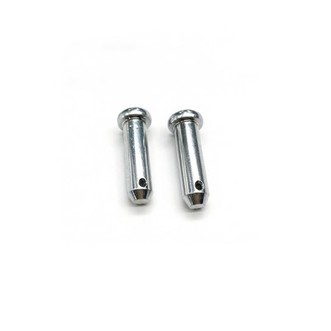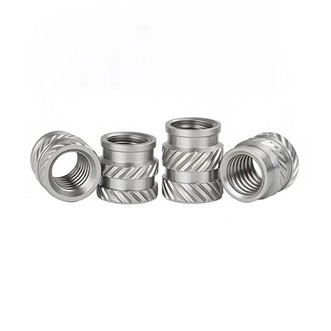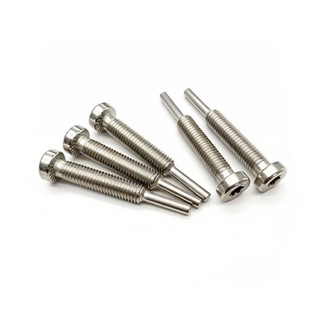

A rivet is inserted through pre-drilled holes in the components to be joined, thereby connecting two or more such parts together; the resulting non-dismountable joint is termed a riveted connection, or simply "riveting."
Riveting offers several advantages, including simple tooling requirements, resistance to seismic activity and impact loads, and robust reliability. Its disadvantages, however, include high noise levels during the riveting process-which can adversely affect workers' health-as well as generally heavier structural assemblies and a significant reduction in the strength of the joined components.
Although riveting remains the primary method for joining light metal structures (such as aircraft assemblies), in the context of steel structures, it is now predominantly reserved for a limited number of applications subject to severe impact or vibration loads-for instance, in the structural frameworks of certain cranes. Riveting is also employed to join non-metallic components, such as in the attachment of friction linings to brake bands and brake shoes within band brake systems.