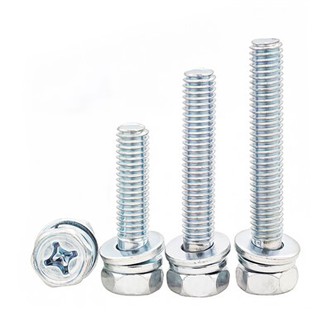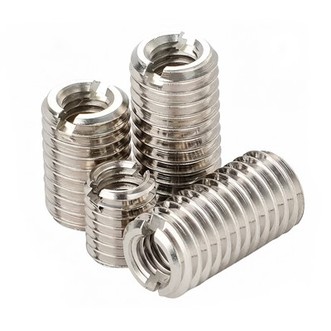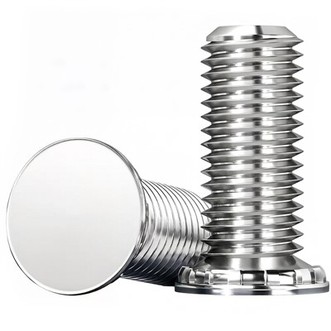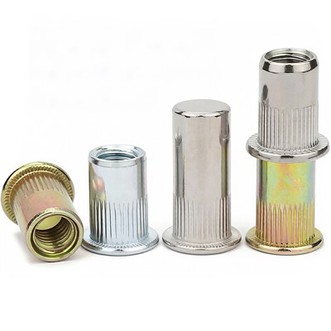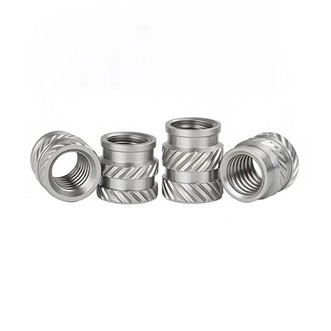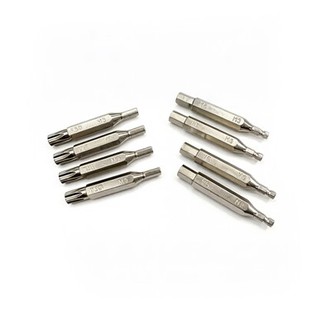

Riveting-a process involving the tight connection of two or more metal parts-is widely utilized throughout the manufacturing industry. It relies on rivets as key components to securely bind parts together, thereby creating a durable and stable mechanical joint that ensures high-strength retention. The riveting process encompasses several critical stages: surface preparation, positioning, drilling, rivet insertion, and finally, fastening and inspection.
Preparation:
Identify the specific metal parts requiring riveting and select the appropriate type and size of rivets.
Drilling:
Drill holes at the designated riveting locations on each part, ensuring that the hole diameters precisely match the rivets to facilitate smooth insertion.
Rivet Insertion:
Insert the selected rivets, one by one, into the pre-drilled holes, applying sufficient force to ensure they sit firmly and securely within the parts.
Trimming and Finishing:
Using shears or appropriate tools, trim away any portions of the rivets protruding beyond the holes, and perform necessary finishing work to ensure a smooth and seamless appearance.
Rivet Fastening:
Utilize specialized tools-such as a rivet gun-to flatten the tail end of each rivet, thereby ensuring a secure and rigid connection.
Riveting, as a mechanical joining technique, finds extensive application across various sectors such as automotive, aerospace, and construction; it is highly favored for its ability to provide high-strength and durable connections. Its fundamental principle involves creating holes and inserting fasteners to tightly bind two or more components together. This process is not only cost-effective and simple to execute but can often be completed without the need for additional auxiliary materials. However, it is important to note that riveting creates a permanent joint; once completed, it is difficult to disassemble or repair, a characteristic that must be carefully considered during the selection process. If the joined components require frequent maintenance or replacement, or if aesthetic standards are particularly high, riveting may not be the optimal choice. In summary, riveting offers a simple, economical, and reliable method of joining, though its suitability must be carefully evaluated based on the specific requirements of each application.
Visual Inspection:
The primary step involves a visual inspection to verify that the riveting is complete and uniform, while carefully checking for any obvious defects such as cracks, looseness, or misalignment.
Manual Inspection:
Gently attempt to wiggle the riveted area with your fingers to detect any looseness or abnormal movement, thereby confirming the stability and integrity of the connection.
Torsion Test:
This test involves applying a rotational force to the riveted joint-typically using tools such as a wrench-to check for any deformation or cracking, thereby assessing the strength and stability of the riveting.
Tensile Test:
The tensile test is a crucial method for evaluating the strength of a riveted joint. It assesses the joint's load-bearing capacity by applying a gradually increasing tensile force to determine whether it meets predetermined standard strength values.
Destructive Test:
In specific scenarios-such as when it is necessary to determine the ultimate strength of a riveted joint-a destructive test is employed. This method evaluates reliability by applying a force exceeding the joint's load-bearing capacity, while observing whether it fractures or fails.
Please note that the selection and application of these inspection methods may vary depending on the specific field and requirements. In practice, it is essential to consult relevant standards and protocols to ensure that the quality and safety of the riveted joints meet the intended specifications.