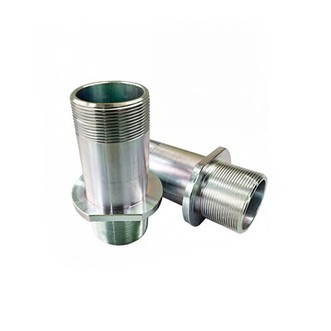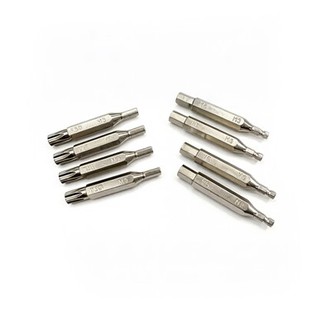

Based on the manner in which the connection bears load, bolts are classified into two types: standard bolts and bolts designed for use in reamed holes. Based on head shape, varieties include hexagonal heads, round heads, square heads, countersunk heads, and others; among these, the hexagonal head is the most commonly used. Generally, countersunk heads are employed in applications where a flush surface is required at the connection point.
U-bolts (known in English as "U-bolts") are non-standard fasteners. Due to their distinctive U-shape, they are also referred to as "U-type bolts." Both ends feature threads designed to engage with nuts. They are primarily used to secure tubular objects-such as water pipes-or flat objects, such as automotive leaf springs. The name "U-bolt" (literally "riding-horse bolt" in Chinese) derives from the fact that the manner in which it secures an object resembles a person riding a horse. Based on thread length, they are categorized into two types: fully threaded and partially threaded.
Based on thread profile, threads are classified into two types: coarse pitch and fine pitch. The coarse-pitch designation is typically omitted from the bolt's markings. Bolts are further classified into eight performance grades: 3.6, 4.8, 5.6, 6.8, 8.8, 9.8, 10.9, and 12.9. Bolts of Grade 8.8 and higher (including 8.8) are manufactured from low-carbon alloy steel or medium-carbon steel and undergo heat treatment (quenching and tempering); these are collectively referred to as "high-strength bolts." Bolts below Grade 8.8 (excluding 8.8) are collectively referred to as "ordinary bolts."
Ordinary bolts are classified into three grades-A, B, and C-based on their manufacturing precision. Grades A and B represent "precision-finished" bolts, while Grade C represents "rough-finished" bolts. For connection bolts used in steel structures, unless otherwise specified, the standard choice is the ordinary, rough-finished Grade C bolt. The manufacturing methods differ across these grades, typically corresponding as follows: The shanks of Grade A and B bolts are machined on a lathe, resulting in smooth surfaces and precise dimensions; these bolts typically possess a material performance grade of 8.8. However, their production and installation processes are complex, and their cost is relatively high, leading to their infrequent use. Grade C bolts are manufactured from unmachined round steel bars; consequently, their dimensions are less precise, and their material performance grade is typically 4.6 or 4.8. While they exhibit greater deformation when used in shear connections, they offer ease of installation and low production costs; they are therefore frequently utilized in tension connections or for temporary fastening during assembly.