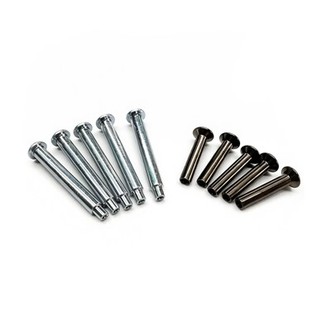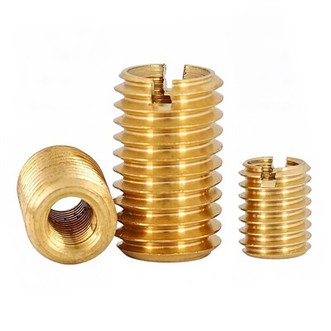

The creation of hardware components resembles a precision surgical operation, where every stage demands absolute seamlessness:
Raw Material Selection: The thickness tolerance of metal sheets-such as cold-rolled steel and aluminum alloys-must be controlled within 0.1 mm.
Precision Blanking: Laser cutting speeds can reach 20 meters per minute, with a cutting edge precision of ±0.05 mm.
Forming & Processing: Stamping dies boast a service life of approximately 500,000 cycles, while bending angle tolerances are maintained within ±0.5°.
Surface Treatment: Electroplating layer thickness typically ranges from 5 to 15 μm, and powder coating curing temperatures range from 180°C to 220°C.
Assembly & Debugging: Thread fits must meet a precision standard of class 6H/6g.
Performance Testing: The baseline standard for acceptance is passing a 48-hour salt spray test without exhibiting any signs of rust.
The Three Golden Rules of Process Selection
Different processing methods are akin to culinary techniques; selecting the right method is essential to producing a superior result:
Complex Geometries: CNC machining centers are the most suitable choice, though their cost is 3 to 5 times higher than that of stamping.
Mass Production: Progressive die stamping offers exceptional efficiency, capable of producing up to 800 parts per hour.
Specialized Properties: Vacuum heat treatment can enhance material hardness by 2 to 3 HRC points.
Thin-Walled Parts: Precision casting allows for minimum wall thicknesses as fine as 0.3 mm.
Irregular Structures: 3D printing enables topological optimization-a design capability often impossible to achieve using traditional manufacturing processes.
The Five Hidden Checkpoints of Quality Control
These minute details determine whether hardware components can truly withstand the test of time:
Raw Material Grain Size: A grain size range of 6 to 8 is considered ideal, as it significantly influences subsequent processing performance.
Stamping Oil Selection: High-viscosity oils help prevent tearing during deep drawing but can increase the difficulty of post-processing cleaning.
Heat Treatment Distortion: For thin sheet metal parts, the deformation resulting from quenching must be controlled within 0.1 mm per meter.
Plating Porosity: High-quality electroplating layers should contain no more than 3 pores per square centimeter.
Assembly Stress: The tolerance for bolt pre-tightening force should be kept within 10% of the specified nominal value.