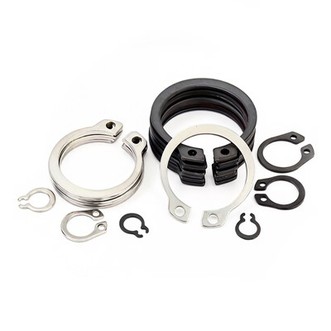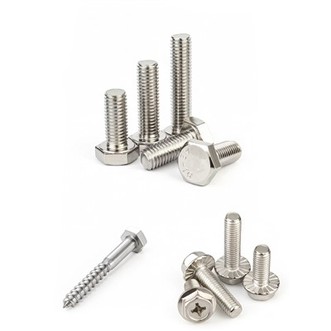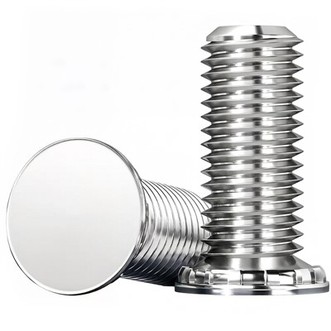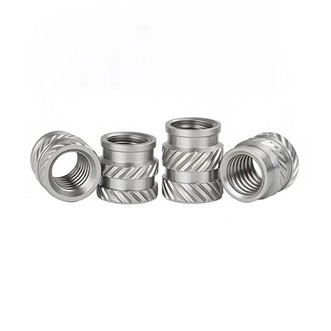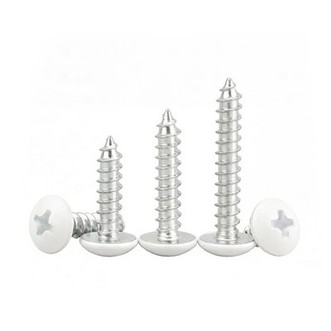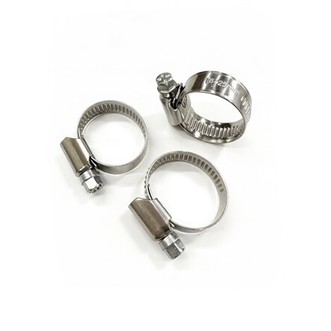

Non-standard fasteners refer to non-universal connecting components designed to meet specific requirements; they transcend conventional limitations regarding size and shape, fitting perfectly into specialized scenarios much like a bespoke suit. Examples include:
Irregular-Flange Bolts: Solving installation challenges in space-constrained environments.
Titanium Alloy Aerospace Screws: Satisfying the dual requirements of lightweight design and corrosion resistance.
Special Self-Locking Nuts: Preventing loosening caused by high-frequency vibration.
When is Customization Necessary?
Universal fasteners often prove inadequate when encountering the following situations:
Special Material Requirements: Chemical processing equipment requiring acid- and alkali-resistant plastic fasteners.
Adaptation to Extreme Environments: Connecting components for polar scientific research equipment that resist brittle fracture at low temperatures.
Integrated Multifunctionality: Fasteners for electronic components that require both electrical conductivity and electromagnetic shielding.
Structural and Spatial Constraints: Specialized screws for medical devices that are miniaturized and ergonomically designed.
The Unique Value of Customization
Opting for customized services is akin to acquiring a "Transformer" for the mechanical world:
Precise Matching: Details-such as thread angles and head profiles-are manufactured exactly according to technical drawings.
Performance Breakthroughs: The ability to combine the advantages of different materials (e.g., a steel core with a plastic coating).
Cost Optimization: Batch customization can actually be more economical than retrofitting existing equipment.
Innovative Potential: Providing technical support and fastening solutions for the research and development of new products.